US Economy Forecast: Analysts Predict 2.8% GDP Growth in Early 2026
US Economy Forecast: Analysts Predict 2.8% GDP Growth in Early 2026
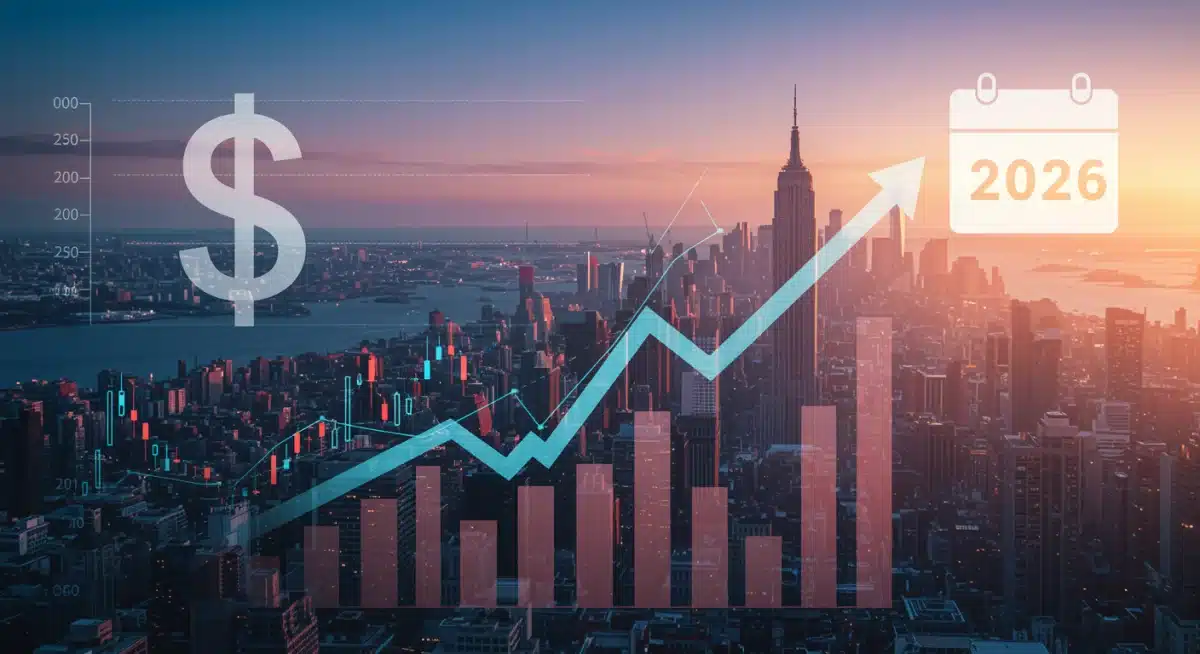
The United States economy stands on the precipice of a new chapter, with leading analysts and financial institutions now forecasting a robust 2.8% Gross Domestic Product (GDP) growth for the first half of 2026. This US Economy Forecast represents a significant vote of confidence in the nation’s economic resilience and its capacity for sustained expansion. As we delve into the intricate details of this projection, it becomes clear that a confluence of factors – from resilient consumer spending to strategic business investments and evolving monetary policies – are setting the stage for a period of noteworthy economic dynamism.
Understanding the nuances of this forecast is crucial for businesses, investors, policymakers, and the general public alike. A 2.8% growth rate, particularly after periods of economic volatility and uncertainty, signals a healthy and expanding economy, offering opportunities but also presenting potential challenges that warrant careful consideration. This article will explore the key drivers behind this optimistic outlook, examine the methodologies employed by analysts, and discuss the potential implications for various sectors of the economy and for individual financial well-being.
The Foundation of Optimism: Key Drivers of the US Economy Forecast
Several fundamental economic indicators and trends underpin the positive US Economy Forecast for early 2026. These drivers, when viewed collectively, paint a picture of an economy gaining momentum and adapting to a rapidly changing global landscape.
Resilient Consumer Spending
Consumer spending, often referred to as the engine of the US economy, continues to demonstrate remarkable resilience. Despite inflationary pressures and higher interest rates in recent periods, American consumers have maintained a strong propensity to spend, supported by a relatively robust labor market and accumulated savings. As inflation is expected to moderate further and real wages potentially see an uplift, discretionary spending is anticipated to receive another boost. This sustained demand for goods and services is a primary pillar supporting the 2.8% GDP growth projection. Analysts are closely watching retail sales data, consumer confidence indices, and personal consumption expenditures (PCE) to confirm these trends, and the indicators suggest a steady, albeit perhaps more measured, pace of consumer activity.
Robust Labor Market Dynamics
The US labor market has defied many predictions of significant slowdowns, remaining surprisingly strong. Low unemployment rates, coupled with consistent job creation, provide a stable income base for households, directly fueling consumer spending. While some sectors may experience shifts, the overall demand for labor is expected to remain healthy into 2026. Wage growth, a critical component of consumer purchasing power, is projected to continue its gradual upward trajectory, supporting household finances without reigniting excessive inflationary pressures. The balance between job availability and wage increases will be a delicate but crucial factor in sustaining economic momentum.
Strategic Business Investment and Innovation
Beyond consumer activity, business investment is poised to play a significant role. Companies are increasingly investing in technology, automation, and infrastructure to enhance productivity and competitiveness. This strategic capital expenditure not only creates jobs in the short term but also lays the groundwork for long-term economic efficiency and growth. Furthermore, innovation, particularly in sectors like artificial intelligence, renewable energy, and biotechnology, is expected to generate new industries and opportunities, contributing substantially to the overall GDP. Government incentives and a favorable regulatory environment could further catalyze this trend, making business investment a powerful contributor to the positive US Economy Forecast.
Evolving Monetary and Fiscal Policies
The Federal Reserve’s approach to monetary policy, particularly regarding interest rates, will be a critical determinant. The expectation is that by early 2026, the Fed will have achieved its inflation targets, potentially leading to a more accommodative stance or at least a period of stable rates. This stability can provide businesses with greater certainty for investment and borrowing. On the fiscal front, potential infrastructure spending, targeted tax policies, or other government initiatives could also provide additional stimulus, though the exact nature and impact of these will depend on the political landscape and economic needs closer to the period. The synergy between monetary and fiscal policies will be key to fostering sustainable growth.
Dissecting the 2.8% GDP Growth: What Does It Mean?
A 2.8% GDP growth rate is generally considered a healthy and sustainable pace for a mature economy like the United States. It suggests an expansion that is strong enough to create jobs and improve living standards without necessarily leading to overheating or excessive inflation. To put this into perspective, the long-term average GDP growth rate for the US has historically hovered around 2-3%. A 2.8% figure indicates that the economy is performing at or slightly above its potential, reflecting efficiency gains and robust demand.

Sectoral Impact and Growth Distribution
While the overall GDP forecast is positive, the growth will likely not be evenly distributed across all sectors. Technology, healthcare, and renewable energy are anticipated to continue their strong performance, driven by innovation and demographic trends. Manufacturing, particularly in areas supported by reshoring initiatives and technological upgrades, could also see a resurgence. The services sector, which constitutes a large portion of the US economy, is expected to benefit from sustained consumer spending. However, sectors heavily reliant on interest-rate sensitive investments, such as real estate, might experience more moderated growth, even with potential rate stability.
Inflation and Price Stability
A key assumption embedded in the 2.8% forecast is that inflation will continue its downward trend, eventually converging towards the Federal Reserve’s 2% target. Analysts believe that supply chain issues will have largely resolved, and the demand-supply imbalances that fueled recent inflationary spikes will have normalized. Maintaining price stability while achieving solid growth is the ‘goldilocks’ scenario that policymakers and economists are aiming for, and the 2026 forecast suggests a credible path towards this equilibrium.
Potential Headwinds and Risks to the US Economy Forecast
No economic forecast is without its uncertainties, and the 2.8% GDP growth projection for early 2026 is subject to several potential headwinds and risks that could alter its trajectory.
Geopolitical Instability
Global geopolitical events, such as ongoing conflicts, trade disputes, or significant shifts in international relations, could disrupt supply chains, impact energy prices, and dampen global demand. The US economy, while largely domestically driven, is not immune to these external shocks. An escalation of tensions in critical regions could lead to increased uncertainty, deterring investment and consumer confidence.
Persistent Inflationary Pressures
While the baseline forecast assumes moderating inflation, there remains a risk that inflationary pressures could prove more persistent than anticipated. Unexpected wage-price spirals, new supply shocks, or a resurgence in commodity prices could force the Federal Reserve to maintain a tighter monetary policy for longer, potentially slowing economic growth. This is a delicate balancing act, and any misstep could have significant repercussions for the US Economy Forecast.
Financial Market Volatility
Sudden and significant volatility in financial markets, triggered by anything from a major corporate default to an unexpected policy announcement, could spill over into the real economy. A sharp correction in asset prices could impact consumer and business confidence, leading to reduced spending and investment. While markets are generally forward-looking, unforeseen events can always trigger periods of instability.
Domestic Policy Uncertainty
The political landscape in the United States, particularly around election cycles, can introduce elements of policy uncertainty. Debates over fiscal spending, taxation, regulatory frameworks, and trade policies can create hesitation among businesses and investors, potentially delaying crucial decisions that impact economic growth. Clarity and consistency in domestic policy are vital for fostering a stable economic environment.
Methodologies Behind the Forecast: How Analysts Arrive at 2.8%
The 2.8% US Economy Forecast is not a mere guess but the result of rigorous analysis by economists using a variety of sophisticated models and data. Understanding these methodologies provides insight into the robustness of the projection.
Econometric Models
Analysts employ complex econometric models that incorporate historical data on GDP, inflation, interest rates, employment, consumer spending, and other key variables. These models use statistical techniques to identify relationships between these variables and project future outcomes based on various assumptions about policy and external factors. Advanced models, often incorporating machine learning, can also identify subtle patterns and correlations that might not be immediately apparent.
Qualitative Analysis and Expert Consensus
Beyond quantitative models, qualitative analysis plays a crucial role. This involves assessing non-numerical factors such as geopolitical risks, technological advancements, consumer sentiment, and policy shifts. Expert economists from various institutions also engage in discussions and build consensus, sharing their insights and refining their projections based on collective wisdom. This blend of quantitative rigor and qualitative judgment helps to create a comprehensive and balanced forecast.
Scenario Planning and Sensitivity Analysis
Forecasters rarely present a single point estimate without considering alternative outcomes. Scenario planning involves developing different economic scenarios (e.g., optimistic, baseline, pessimistic) based on varying assumptions about key drivers. Sensitivity analysis then examines how the GDP forecast would change if one or more assumptions were altered. This helps to understand the range of possible outcomes and the factors that could significantly sway the final growth rate.
Implications for Businesses and Investors in 2026
A forecast of 2.8% GDP growth carries significant implications for various stakeholders, particularly businesses and investors looking to navigate the economic landscape of 2026.
Opportunities for Businesses
For businesses, a growing economy translates into increased demand for products and services. Companies can anticipate opportunities for revenue growth, expansion, and job creation. Those in sectors poised for strong performance, such as technology, healthcare, and sustainable energy, may find fertile ground for innovation and market penetration. Strategic investments in R&D, workforce development, and supply chain optimization will be crucial to capitalize on this growth.

Investment Strategies
Investors will likely seek opportunities in sectors expected to outperform. Equities may see continued strength, particularly in growth-oriented companies. Fixed income markets might stabilize as interest rate uncertainty diminishes. Real estate could present opportunities in specific markets driven by population shifts and economic activity, though overall market conditions will depend on regional and local factors. Diversification and a long-term perspective will remain paramount, as even a generally positive outlook can have underlying volatility.
Workforce and Talent Management
A growing economy typically leads to a tighter labor market. Businesses will need to focus on attracting and retaining talent, potentially through competitive wages, benefits, and professional development opportunities. Investment in automation and AI could become even more critical to boost productivity in the face of potential labor shortages in certain specialized fields. The skills gap will remain a significant consideration, necessitating ongoing training and education initiatives.
The Role of the US Economy in the Global Context
The US economy does not operate in isolation. Its performance has significant ripple effects across the global economy. A healthy 2.8% GDP growth in the United States would be a positive signal for international trade, investment, and global economic stability.
Global Trade and Demand
As the largest economy in the world, strong US growth translates into increased demand for imports, benefiting exporting nations. This can stimulate global trade and provide a boost to international economic activity. Furthermore, a confident US consumer market can indirectly support global markets by increasing demand for goods and services produced worldwide.
Investment Flows
A robust US economy tends to attract foreign direct investment, as businesses seek to tap into its growth potential. This inflow of capital can further fuel innovation and job creation within the United States. Conversely, US companies may also increase their outbound investments, contributing to global economic integration and development.
Currency and Financial Markets
The strength of the US economy is closely linked to the value of the US dollar and the stability of global financial markets. A positive US Economy Forecast can reinforce the dollar’s status as a reserve currency and its role in international transactions, providing a degree of stability in a sometimes volatile global financial system.
Preparing for the Future: Recommendations and Outlook
As the US economy looks towards a promising first half of 2026 with a projected 2.8% GDP growth, preparation and strategic planning are essential for all stakeholders.
For Businesses: Adapt and Innovate
Businesses should continue to invest in digital transformation, sustainable practices, and workforce training. Agility in adapting to market shifts and consumer preferences will be paramount. Diversifying supply chains and exploring new markets can also mitigate risks associated with global uncertainties. Focusing on customer experience and value proposition will be key to capturing market share in a growing but competitive environment.
For Investors: Prudence and Diversification
Investors should maintain a diversified portfolio, considering both growth and value stocks, as well as alternative investments. Staying informed about sector-specific trends and macroeconomic indicators will be crucial. While the overall outlook is positive, market corrections and volatility are always possible, making a long-term perspective and disciplined investment strategy vital.
For Policymakers: Balanced Approach
Policymakers will need to continue to strike a delicate balance between fostering growth and maintaining fiscal responsibility. Prudent monetary policy, aimed at anchoring inflation expectations, will be essential. Fiscal policies that support infrastructure, education, and innovation can lay the groundwork for sustained long-term growth and enhance the nation’s competitiveness on the global stage. Addressing structural issues such as income inequality and healthcare costs will also contribute to a more resilient and equitable economy.
For Consumers: Financial Planning
Consumers should prioritize financial planning, including saving for emergencies, managing debt, and investing for the future. A growing economy generally means more job opportunities and potentially higher wages, but it also underscores the importance of financial literacy and prudent spending habits. Taking advantage of educational opportunities to enhance skills can also improve individual earning potential in a dynamic labor market.
Conclusion: A Promising Horizon for the US Economy
The US Economy Forecast of 2.8% GDP growth for the first half of 2026 paints an optimistic picture of stability and expansion. This projection is built upon a foundation of resilient consumer spending, strategic business investments, a robust labor market, and evolving monetary and fiscal policies. While potential headwinds such as geopolitical instability, persistent inflation, and financial market volatility exist, analysts are confident that the underlying strengths of the US economy will enable it to navigate these challenges.
This outlook offers significant opportunities for businesses to grow, for investors to find value, and for individuals to benefit from a healthy economic environment. However, seizing these opportunities will require careful planning, adaptability, and a proactive approach to managing both risks and rewards. As the nation moves towards 2026, the focus will remain on fostering sustainable growth, maintaining price stability, and ensuring that the benefits of economic expansion are broadly shared across all segments of society. The journey ahead promises to be dynamic, and with sound strategies, the US economy is well-positioned for a period of robust performance.