Navigating Inflation: Protecting Your Savings from 3.5% Loss in 2025

Implementing robust financial strategies is crucial for individuals aiming to protect their savings from a projected 3.5% inflation loss in 2025, focusing on investments that historically outperform rising costs.
As we look towards 2025, the prospect of a projected 3.5% inflation loss can be daunting for many Americans.
Understanding how to effectively navigate this economic landscape and implement strategies for
protecting savings from inflation is not just prudent, but essential for maintaining
financial stability and growth.
Understanding the Inflation Landscape for 2025
The economic forecast for 2025 suggests a continued need for vigilance against inflation. While specific
numbers can fluctuate, a projected 3.5% loss indicates that the purchasing power of your money could
diminish significantly if left unaddressed. This anticipated rate, though potentially lower than recent
peaks, still poses a substantial threat to stagnant savings accounts.
Inflation is essentially the rate at which the general level of prices for goods and services is rising,
and subsequently, the purchasing power of currency is falling. For savers, this means that every dollar
held today will buy less in the future. The challenge lies in finding avenues where your money can grow
at a rate that at least matches, if not surpasses, this inflationary erosion.
What Drives Inflation?
Several factors contribute to inflationary pressures. These can include strong consumer demand,
disruptions in global supply chains, government fiscal policies, and even geopolitical events.
Understanding these underlying drivers helps in anticipating future trends and preparing proactive
financial responses.
- Demand-Pull Inflation: Occurs when aggregate demand in an economy outpaces aggregate supply, driving prices up.
- Cost-Push Inflation: Results from an increase in the cost of production, such as rising wages or raw material prices.
- Monetary Policy: Actions by central banks, like adjusting interest rates, can also influence inflation.
- Supply Chain Issues: Global events or disruptions can limit the availability of goods, leading to price hikes.
The interplay of these factors creates a complex economic environment. For 2025, economists are closely
monitoring labor market conditions, energy prices, and geopolitical stability as key indicators that
could sway inflation rates. Being informed about these dynamics is the first step in formulating an
effective strategy to safeguard your financial assets.
Diversifying Your Investment Portfolio
One of the most robust strategies for combating inflation is through intelligent diversification of your
investment portfolio. Relying solely on cash or low-yield savings accounts during an inflationary period
is akin to watching your money lose value in real time. A well-diversified portfolio aims to spread
risk and maximize returns across various asset classes, some of which are historically known to perform
well during inflationary times.
Diversification isn’t just about owning different types of assets; it’s about owning assets that react
differently to economic conditions. When one asset class might be struggling due to inflation, another
might be thriving, thereby balancing out the overall performance of your portfolio.
Inflation-Resistant Asset Classes
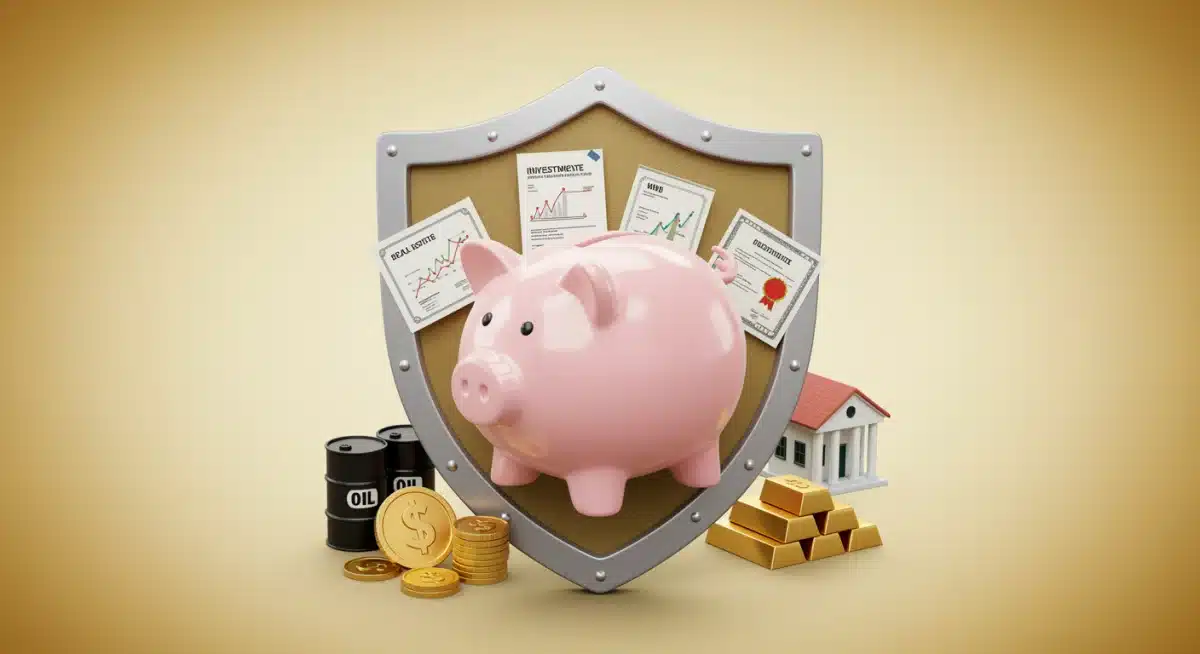
Certain asset classes have a track record of performing better when inflation is high. These often include
real assets and those with pricing power that can pass on increased costs to consumers.
- Real Estate: Property values and rental income often rise with inflation, offering a tangible asset hedge.
- Commodities: Raw materials like gold, silver, oil, and agricultural products tend to increase in value as inflation rises.
- Treasury Inflation-Protected Securities (TIPS): These government bonds are specifically designed to protect against inflation, as their principal value adjusts with the Consumer Price Index (CPI).
- Stocks of Companies with Pricing Power: Businesses that can raise their prices without significant loss of demand often fare well during inflationary periods.
When constructing your portfolio, consider consulting with a financial advisor to tailor a strategy that
aligns with your risk tolerance and financial goals. The goal is not just to preserve capital but to grow
it in real terms, meaning after accounting for inflation.
A balanced approach, combining traditional investments with inflation-hedging assets, can provide a more
resilient financial foundation against the backdrop of a projected 3.5% inflation loss in 2025. Regularly
reviewing and adjusting your portfolio based on economic indicators and personal circumstances is key to
long-term success.
Exploring Real Estate and Tangible Assets as Hedges
Real estate and other tangible assets have long been considered reliable hedges against inflation. Unlike
cash, which loses purchasing power, physical assets often appreciate in value as the cost of living rises.
This makes them an attractive option for those looking to preserve and grow their wealth in an inflationary
environment.
The appeal of real estate stems from its dual benefit: potential for capital appreciation and rental income.
As inflation drives up the cost of construction and materials, the value of existing properties tends to
increase. Additionally, landlords can often adjust rental rates to keep pace with inflation, providing a
steady stream of inflation-indexed income.
Investing in Real Estate
Direct ownership of physical property, such as residential homes or commercial buildings, can be a potent
inflation hedge. However, it requires significant capital and management. For those seeking less direct
involvement, Real Estate Investment Trusts (REITs) offer an accessible alternative.
- Direct Property Ownership: Provides control and potential for significant appreciation, but involves high costs and active management.
- REITs (Real Estate Investment Trusts): Allow investment in real estate portfolios through publicly traded stocks, offering liquidity and diversification.
- Farmland: Often appreciates with inflation and provides income through agricultural production, though it can be illiquid.
Beyond real estate, other tangible assets can also serve as inflation hedges. Collectibles, fine art,
and precious metals like gold and silver have historically retained their value during periods of economic
uncertainty and inflation. While these can be more volatile and require specialized knowledge, they offer
another layer of diversification.
When considering tangible assets, it’s crucial to understand their liquidity and storage implications.
While they can offer significant protection against inflation, they may not be as easily converted to cash
as other types of investments. A balanced approach that includes a mix of real estate, commodities, and
other tangible assets can provide a robust defense against the erosive effects of inflation on your savings.
Leveraging Inflation-Indexed Securities and Bonds
For investors prioritizing capital preservation and predictable returns, inflation-indexed securities and
certain types of bonds offer a direct mechanism to counter the effects of rising prices. These financial
instruments are specifically designed to adjust their value or payouts based on inflation, providing a more
secure way to protect your savings.
The most prominent example of such securities in the United States are Treasury Inflation-Protected
Securities (TIPS). Issued by the U.S. Treasury, TIPS are an excellent way to ensure your investment keeps
pace with inflation, as their principal value is adjusted by the Consumer Price Index (CPI).
How TIPS Work
TIPS offer a unique protection mechanism. The principal value of a TIPS bond increases with inflation
and decreases with deflation, as measured by the CPI. When the bond matures, you receive either the
original or adjusted principal, whichever is greater. Interest payments are also made on the adjusted
principal, meaning your interest income rises with inflation.
- Principal Adjustment: The face value of the bond increases with inflation, directly countering the loss of purchasing power.
- Interest Payments: Interest is paid on the adjusted principal, ensuring your income stream also keeps pace with rising prices.
- Deflation Protection: At maturity, you are guaranteed to receive at least your original principal amount, even if deflation occurred.
While TIPS offer superb inflation protection, it’s important to consider their tax implications. The
increase in principal due to inflation is considered taxable income in the year it occurs, even though
you don’t receive this money until the bond matures. This is known as “phantom income” and should be
factored into your overall financial planning.
Beyond TIPS, other inflation-indexed bonds may be available through various issuers. While their structures
might differ, the core principle remains the same: providing a return that accounts for inflation. Integrating
these securities into your portfolio can be a strategic move to directly mitigate the projected 3.5% loss
due to inflation in 2025, offering peace of mind through guaranteed real returns.
Adjusting Your Budget and Spending Habits
Beyond investment strategies, adapting your personal budget and spending habits is a critical, often
overlooked, component of protecting your savings from inflation. When prices are rising, every dollar
you spend has a greater impact on your overall financial health. By meticulously managing your income
and outgo, you can free up more capital for inflation-hedging investments and reduce the necessity of
drawing down your existing savings.
The first step involves a thorough review of your current budget. Identify areas where expenses can be
reduced or eliminated without significantly impacting your quality of life. This could range from small
daily expenditures to larger monthly subscriptions or discretionary spending.
Strategies for Budget Optimization
Optimizing your budget during inflationary periods requires a disciplined approach. Focus on distinguishing
between needs and wants, and prioritize spending that aligns with your long-term financial goals.
- Track Expenses Diligently: Understand exactly where your money is going to identify potential savings.
- Cut Discretionary Spending: Reduce expenses on non-essential items like dining out, entertainment, or impulse purchases.
- Negotiate Bills and Services: Contact providers for internet, cable, and insurance to inquire about lower rates or better plans.
- Optimize Energy Consumption: Lowering utility bills through energy-efficient practices can free up significant funds.
Furthermore, consider ways to boost your income. This could involve taking on a side hustle, negotiating
a raise, or exploring new income streams. The combination of reduced spending and increased income creates
a stronger financial buffer against inflation, allowing you to save more and invest more effectively.
By proactively adjusting your budget and refining your spending habits, you’re not just reacting to
inflation; you’re actively taking control of your financial narrative. This personal financial discipline
is a powerful tool in protecting your savings from the projected 3.5% loss in 2025 and ensuring your money
works harder for you.
Considering Alternative Investments and Income Streams
In an era of persistent inflation, traditional investment vehicles might not always offer sufficient
protection. Exploring alternative investments and developing additional income streams can provide vital
diversification and an enhanced ability to combat the erosion of purchasing power. These options often
carry different risk profiles and liquidity characteristics, making careful consideration essential.
Alternative investments can span a wide range, from private equity and venture capital to cryptocurrencies
and peer-to-peer lending. While some are less accessible to the average investor, others have become more
mainstream. The key is to seek out opportunities that have the potential to generate returns that outpace
inflation, rather than just matching it.
Emerging Investment Avenues
As markets evolve, new opportunities arise that may offer unique inflation-hedging qualities. It’s crucial
to conduct thorough due diligence and understand the associated risks before committing capital.
- Cryptocurrencies: While volatile, some view Bitcoin as a potential hedge against fiat currency inflation due to its finite supply.
- Private Equity/Venture Capital: Investing in private companies can offer higher growth potential, though with higher risk and illiquidity.
- Peer-to-Peer Lending: Allows individuals to lend money to others, potentially earning higher interest rates than traditional savings accounts.
- Managed Futures: Strategies that invest in futures contracts across various asset classes, often performing well during volatile markets.
Beyond investments, creating additional income streams can directly bolster your financial resilience.
This could involve monetizing a hobby, freelancing, or starting a small business. The extra income can be
used to further invest in inflation-resistant assets, pay down high-interest debt, or simply increase your
emergency fund, thereby reducing your reliance on savings that might be losing value.
The landscape of alternative investments and income generation is vast. By thoughtfully exploring these
avenues, you can build a more resilient financial strategy that actively works to protect your savings
from the projected 3.5% inflation loss in 2025, ensuring your financial future remains robust and secure.
Long-Term Financial Planning and Professional Guidance
Effective navigation of inflationary periods, especially when facing a projected 3.5% loss in 2025, requires
more than just short-term adjustments; it demands comprehensive long-term financial planning. This involves
setting clear financial goals, understanding your risk tolerance, and regularly reviewing your strategy
to adapt to changing economic conditions. The complexity of modern financial markets often makes professional
guidance an invaluable asset in this process.
A well-structured financial plan acts as a roadmap, guiding your decisions and ensuring that your actions
are aligned with your objectives. It encompasses various aspects, from retirement planning and investment
strategies to estate planning and risk management. During inflationary times, such a plan becomes even more
critical, as it helps to identify potential vulnerabilities and opportunities to safeguard your wealth.
The Role of Financial Advisors
Working with a qualified financial advisor can provide significant advantages. Advisors bring expertise
and an objective perspective, helping you to make informed decisions and avoid common pitfalls.
- Personalized Strategy: Advisors can create a tailored financial plan that considers your unique circumstances, risk tolerance, and goals.
- Market Insights: They provide expert analysis of economic trends, including inflation forecasts, and recommend appropriate adjustments to your portfolio.
- Diversification Expertise: Advisors can help you build a diversified portfolio that includes inflation-hedging assets, balancing risk and potential returns.
- Behavioral Coaching: They can help you stay disciplined during market volatility, preventing emotional decisions that could harm your long-term wealth.
Regular reviews of your financial plan are paramount. Economic conditions, personal circumstances, and
inflationary pressures are constantly evolving. A periodic check-up with your advisor ensures that your
strategy remains relevant and effective in protecting your savings. This proactive approach to financial
management is the cornerstone of building lasting wealth and mitigating the impact of inflation.
Ultimately, a robust long-term financial plan, coupled with professional guidance, empowers you to confidently
face the challenges posed by inflation. It allows you to transform potential losses into opportunities for
growth, securing your financial well-being well beyond 2025.
| Key Strategy | Brief Description |
|---|---|
| Diversified Investments | Spread investments across various asset classes like stocks, bonds, and commodities to mitigate inflation risk. |
| Real Estate & Tangible Assets | Invest in properties or physical goods like precious metals, which tend to appreciate with inflation. |
| Inflation-Indexed Securities | Utilize instruments like TIPS that adjust their value with inflation to preserve purchasing power. |
| Budget Adjustment | Optimize spending and seek additional income streams to free up capital for protective investments. |
Frequently Asked Questions About Inflation and Savings
A 3.5% projected inflation loss means that the purchasing power of your money will decrease by 3.5% over the year if your savings do not earn at least that much. For every $100 saved, its value would effectively be $96.50 in terms of buying power.
Generally, traditional savings accounts are not effective against inflation. Their interest rates typically fall below the rate of inflation, meaning your money loses purchasing power over time. For example, if inflation is 3.5% and your savings account yields 0.5%, you’re still losing 3% in real terms.
Real estate can protect savings as property values and rental income often rise with inflation. It acts as a tangible asset, whose value tends to increase as the cost of construction and materials goes up, offering both capital appreciation and potential inflation-adjusted income streams.
TIPS are U.S. Treasury bonds whose principal value is adjusted based on the Consumer Price Index (CPI) to protect against inflation. As inflation rises, the principal increases, and interest payments are made on this adjusted principal, ensuring your investment keeps pace with rising prices.
Yes, consulting a financial advisor is highly recommended. They can help create a personalized strategy tailored to your risk tolerance and goals, provide market insights, and ensure your investment portfolio is diversified with inflation-hedging assets, offering expert guidance during uncertain economic times.
Conclusion
The prospect of a projected 3.5% inflation loss in 2025 underscores the critical need for proactive financial planning and strategic adjustments. By understanding the drivers of inflation, diversifying investment portfolios with inflation-resistant assets like real estate and commodities, and leveraging inflation-indexed securities such as TIPS, individuals can significantly mitigate the erosion of their purchasing power. Furthermore, optimizing personal budgets, exploring alternative income streams, and seeking professional financial guidance are essential components of a robust strategy. Taking these deliberate steps ensures that your savings are not merely preserved, but poised for growth, safeguarding your financial future against economic uncertainties.