AI in US K-12 Education: 3 Key Trends for 2025

Artificial intelligence is set to profoundly transform US K-12 education by 2025, primarily through personalized learning pathways, enhanced administrative efficiencies, and the imperative development of new AI-literacy skills for students.
The educational landscape in the United States is on the brink of a significant transformation, driven by the rapid advancements in artificial intelligence. By 2025, the impact of AI on US K-12 education: 3 key trends for 2025 will fundamentally reshape how students learn, how teachers teach, and how schools operate. This isn’t merely about integrating new tools; it’s about redefining the very core of educational experiences to be more adaptive, efficient, and relevant to the demands of a future-forward world.
The rise of personalized learning pathways
One of the most profound shifts AI is bringing to US K-12 education is the widespread adoption of personalized learning pathways. Traditional one-size-fits-all instruction often leaves some students behind while others are not sufficiently challenged. AI offers a dynamic solution by tailoring educational content, pace, and methods to each student’s unique needs and learning style.
This trend moves beyond simple adaptive quizzes. AI-powered platforms can analyze student performance data in real-time, identify knowledge gaps or areas of strength, and then recommend specific resources, exercises, or even entirely different instructional approaches. For instance, a student struggling with algebra might receive additional interactive tutorials and practice problems, while another excelling in the same subject could be presented with advanced concepts or enrichment activities. This level of customization ensures that every student is learning at their optimal pace and engaging with material that is most effective for them.
AI-driven content adaptation
AI’s ability to adapt content makes learning more engaging and accessible. It can transform static textbooks into interactive experiences, offering different explanations or examples based on a student’s prior performance.
- AI can adjust the complexity of texts to match reading levels.
- It can provide multimedia explanations (videos, simulations) for visual learners.
- Generate varied practice problems to reinforce concepts without repetition.
- Offer immediate, constructive feedback that guides students toward understanding.
The goal is not to replace teachers but to empower them with data-driven insights and tools that enable them to provide more targeted support and interventions. Teachers can spend less time on grading routine assignments and more time on high-value interactions, such as mentoring, facilitating discussions, and addressing complex student needs. This collaborative approach between human educators and AI systems promises a more effective and equitable learning environment for all.
In conclusion, personalized learning pathways, fueled by AI, are set to revolutionize how individual students progress through their K-12 education. By creating adaptive and responsive learning environments, AI ensures that each student receives an education uniquely suited to their capabilities and goals, thereby maximizing their potential.
Enhancing administrative efficiency and operational support
Beyond the classroom, AI is poised to significantly enhance the administrative efficiency and operational support within US K-12 school systems. Schools are complex organizations, often burdened by extensive paperwork, data management, and logistical challenges. AI technologies offer solutions to automate mundane tasks, optimize resource allocation, and improve overall school management, freeing up valuable human capital for more critical educational initiatives.
Consider the sheer volume of data schools handle, from attendance records and grades to standardized test scores and disciplinary reports. AI can process and analyze this data much faster and with greater accuracy than traditional methods. This leads to better-informed decision-making, whether it’s identifying at-risk students earlier, optimizing bus routes, or forecasting enrollment numbers. The benefits extend to budgeting and resource allocation, ensuring that funds are utilized effectively to support student success.
Automating routine tasks
AI-powered automation can take over numerous time-consuming administrative duties, allowing staff to focus on more impactful work.
- Automated grading for objective assignments, providing instant feedback.
- Streamlined scheduling for classes, parent-teacher conferences, and extracurriculars.
- Intelligent systems for managing student records and compliance reporting.
- Predictive analytics to anticipate maintenance needs for school facilities.
Furthermore, AI can improve communication within school communities. Chatbots can handle routine inquiries from parents and students, providing instant answers to frequently asked questions about school policies, events, or assignments. This reduces the burden on administrative staff and ensures that stakeholders receive timely information. The implementation of AI in these areas translates directly into more efficient operations and a more responsive school environment.
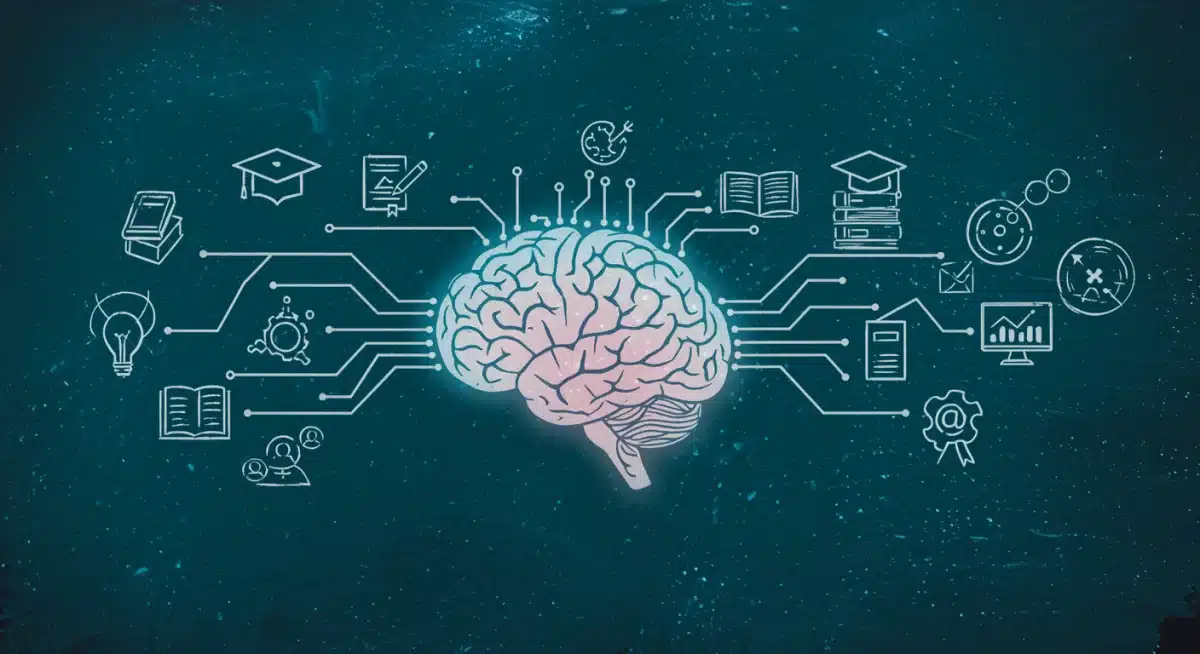
Ultimately, by leveraging AI for administrative and operational tasks, K-12 institutions can become leaner and more effective. This efficiency gain is not just about saving money; it is about reallocating human effort to where it matters most: directly supporting student learning and well-being. Schools can then dedicate more resources to curriculum development, teacher training, and student support services, fostering a more robust educational ecosystem.
Developing AI literacy and future-ready skills for students
The third crucial trend for 2025 is the imperative to develop AI literacy and future-ready skills among K-12 students. As AI becomes increasingly pervasive in society and the workforce, understanding its principles, applications, and ethical implications will be as fundamental as traditional literacy and numeracy. Schools must equip students not just to use AI tools but to critically engage with them and contribute to their development.
This means integrating AI concepts into the curriculum across various subjects, not just in computer science classes. For example, in social studies, students might discuss the ethical implications of AI in surveillance or decision-making. In English, they could analyze AI-generated texts or explore how AI impacts communication. Science classes could delve into the algorithms behind AI and its applications in research. The goal is to demystify AI and cultivate a generation that is both competent and confident in navigating an AI-powered world.
Curriculum integration and ethical considerations
Integrating AI literacy involves more than just teaching coding; it encompasses a broader understanding of AI’s societal role.
- Introducing basic AI concepts and machine learning principles.
- Discussing the ethical implications of AI, including bias and privacy.
- Encouraging critical thinking about AI-generated information.
- Developing problem-solving skills using AI tools and principles.
Furthermore, fostering future-ready skills extends beyond AI literacy to include competencies that AI cannot easily replicate, such as creativity, critical thinking, complex problem-solving, and emotional intelligence. While AI can automate many routine tasks, human skills like innovation, collaboration, and ethical reasoning will become even more valuable. K-12 education must deliberately cultivate these uniquely human attributes, preparing students for roles that require adaptability and a nuanced understanding of complex challenges.
In essence, preparing students for an AI-driven future means nurturing a balanced skill set: a solid understanding of AI technology coupled with robust human capabilities. This dual focus ensures that students are not merely consumers of AI but active participants and innovators in shaping the future world, ready to thrive in an evolving global economy.
Challenges and opportunities in AI adoption
While the benefits of AI in US K-12 education are clear, the path to widespread adoption is not without its challenges. Implementing AI effectively requires significant investment in infrastructure, teacher training, and equitable access to technology. Many schools, particularly those in underserved communities, face hurdles in acquiring the necessary hardware, software, and reliable internet connectivity. Addressing these disparities is crucial to ensure that AI’s transformative power benefits all students, not just a select few.
Teacher training is another critical aspect. Educators need professional development opportunities to understand AI tools, integrate them into their pedagogy, and adapt their teaching strategies. This goes beyond technical proficiency; it involves understanding how AI can enhance learning outcomes, manage classroom dynamics, and support diverse student needs. Without adequately trained teachers, even the most advanced AI solutions will fail to reach their full potential in the classroom.
Overcoming implementation hurdles
Successful AI integration requires strategic planning and a commitment to overcoming common obstacles.
- Securing adequate funding for technology and infrastructure upgrades.
- Providing ongoing, high-quality professional development for educators.
- Ensuring equitable access to AI tools and internet connectivity for all students.
- Developing robust data privacy and security protocols.
However, these challenges also present significant opportunities. The demand for educational technology solutions is spurring innovation, leading to more user-friendly and pedagogically sound AI tools. Furthermore, the push for AI integration can catalyze broader discussions about educational equity, leading to policies and initiatives that benefit marginalized student populations. By proactively addressing these challenges, schools can leverage AI to create more inclusive, effective, and future-ready learning environments.
In summary, while the journey to fully integrate AI into K-12 education presents logistical and financial challenges, these obstacles also pave the way for innovation and a renewed focus on educational equity and teacher empowerment.
Ethical considerations and responsible AI use
As AI becomes more deeply embedded in US K-12 education, critical ethical considerations surrounding its use must be addressed responsibly. Issues such as data privacy, algorithmic bias, and the potential for over-reliance on technology are paramount. Schools must establish clear guidelines and policies to ensure that AI tools are used in a manner that protects student data, promotes fairness, and maintains the essential human element in education.
Student data privacy is a primary concern. AI systems often rely on vast amounts of personal and performance data to function effectively. Schools must guarantee that this data is collected, stored, and used securely and ethically, adhering to strict privacy regulations. Parents and students need transparency regarding how their data is used and how their privacy is protected. Without trust, the adoption of AI tools will face significant resistance.
Addressing bias and ensuring fairness
Algorithmic bias is another critical ethical challenge. If AI systems are trained on biased data, they can perpetuate or even amplify existing inequalities, potentially disadvantaging certain groups of students.
- Regularly audit AI algorithms for fairness and bias.
- Ensure diverse and representative datasets are used for AI training.
- Promote transparency in how AI decisions are made.
- Educate students and staff about potential AI biases.
Moreover, there is a need to balance the efficiency of AI with the irreplaceable role of human interaction and judgment in education. While AI can automate many tasks, it cannot fully replicate the empathy, critical thinking, and nuanced understanding that human teachers provide. Education must remain a fundamentally human endeavor, with AI serving as a powerful assistant rather than a replacement for meaningful human connections. Responsible AI integration means leveraging its strengths while safeguarding the core values of education.
To conclude, the ethical implications of AI in K-12 education demand careful consideration and proactive measures. By prioritizing data privacy, addressing algorithmic bias, and maintaining the human touch, schools can ensure that AI serves as a beneficial and responsible tool for learning.
Preparing for the future: policy and innovation
Looking ahead to 2025 and beyond, effective integration of AI into US K-12 education will require forward-thinking policy frameworks and continuous innovation. Policies need to evolve rapidly to keep pace with technological advancements, providing clear guidance on everything from data governance and AI procurement to teacher training standards and curriculum development. Without supportive policies, the potential of AI to transform education may remain largely untapped or lead to fragmented implementation.
Policymakers at federal, state, and local levels must collaborate with educators, technology experts, and community stakeholders to create adaptable regulations. These policies should encourage innovation while safeguarding against potential pitfalls, ensuring that AI solutions are equitable, effective, and aligned with educational goals. This proactive approach will foster an environment where schools feel confident in exploring and adopting new AI technologies.
Driving innovation through collaboration
Innovation in AI for education is not solely the responsibility of technology companies; it is a collaborative effort involving many stakeholders.
- Encourage partnerships between schools, universities, and tech companies.
- Fund research into effective AI applications in diverse educational settings.
- Create platforms for sharing best practices and successful AI implementations.
- Foster a culture of experimentation and continuous improvement in schools.
Furthermore, continuous innovation in AI tools themselves will be vital. As AI technology matures, we can expect more sophisticated and nuanced applications tailored specifically for educational contexts. This includes AI that can better understand complex student emotions, offer personalized creative assignments, or even facilitate collaborative learning among students globally. The future of AI in K-12 education is not a static endpoint but an ongoing journey of discovery and refinement, driven by a commitment to enhancing learning outcomes for every student.
In conclusion, preparing for the future of AI in K-12 education necessitates robust policy development and a culture of continuous innovation. By working together, stakeholders can create a dynamic and responsive educational system that harnesses AI’s full potential for the benefit of all students.
| Key Trend | Brief Description |
|---|---|
| Personalized Learning | AI tailors content and pace to individual student needs, optimizing learning outcomes. |
| Administrative Efficiency | AI automates tasks, streamlines operations, and frees staff for educational focus. |
| AI Literacy & Skills | Curriculum integrates AI concepts, ethics, and future-ready human skills. |
Frequently asked questions about AI in K-12 education
Personalized learning, powered by AI, involves educational systems that adapt to each student’s unique learning style, pace, and needs. AI analyzes performance data to recommend customized content, resources, and feedback, ensuring more effective and engaging learning experiences than traditional methods.
AI streamlines administrative tasks by automating routine processes like grading, scheduling, and data management. This frees up school staff from manual work, allowing them to focus more on direct student support, curriculum development, and strategic planning, enhancing overall school operations.
AI literacy is crucial because AI is increasingly central to society and the workforce. Students need to understand AI’s principles, applications, and ethical implications to navigate an AI-powered world, critically engage with technology, and develop future-ready skills that complement AI capabilities.
Key challenges include ensuring equitable access to technology and internet, providing adequate teacher training, securing substantial funding for infrastructure, and addressing ethical concerns related to data privacy and algorithmic bias. Overcoming these requires careful planning and collaboration.
Schools can ensure ethical AI use by implementing strict data privacy policies, regularly auditing AI algorithms for bias, promoting transparency in AI operations, and educating both staff and students about ethical AI principles. Maintaining the human role in education is also paramount.
Conclusion
The convergence of advanced artificial intelligence with the needs of US K-12 education is creating a dynamic and promising future. The three key trends for 2025 – personalized learning pathways, enhanced administrative efficiency, and the development of comprehensive AI literacy – are not isolated developments but interconnected forces reshaping the entire educational ecosystem. While challenges in implementation and ethical considerations demand careful attention, the potential for AI to foster more equitable, effective, and engaging learning experiences is immense. By embracing these trends thoughtfully and strategically, schools can empower students with the skills and knowledge necessary to thrive in an increasingly AI-driven world, ensuring that education remains relevant and transformative for generations to come.