AI Education in US Schools: Preparing Students for 2026 and Beyond
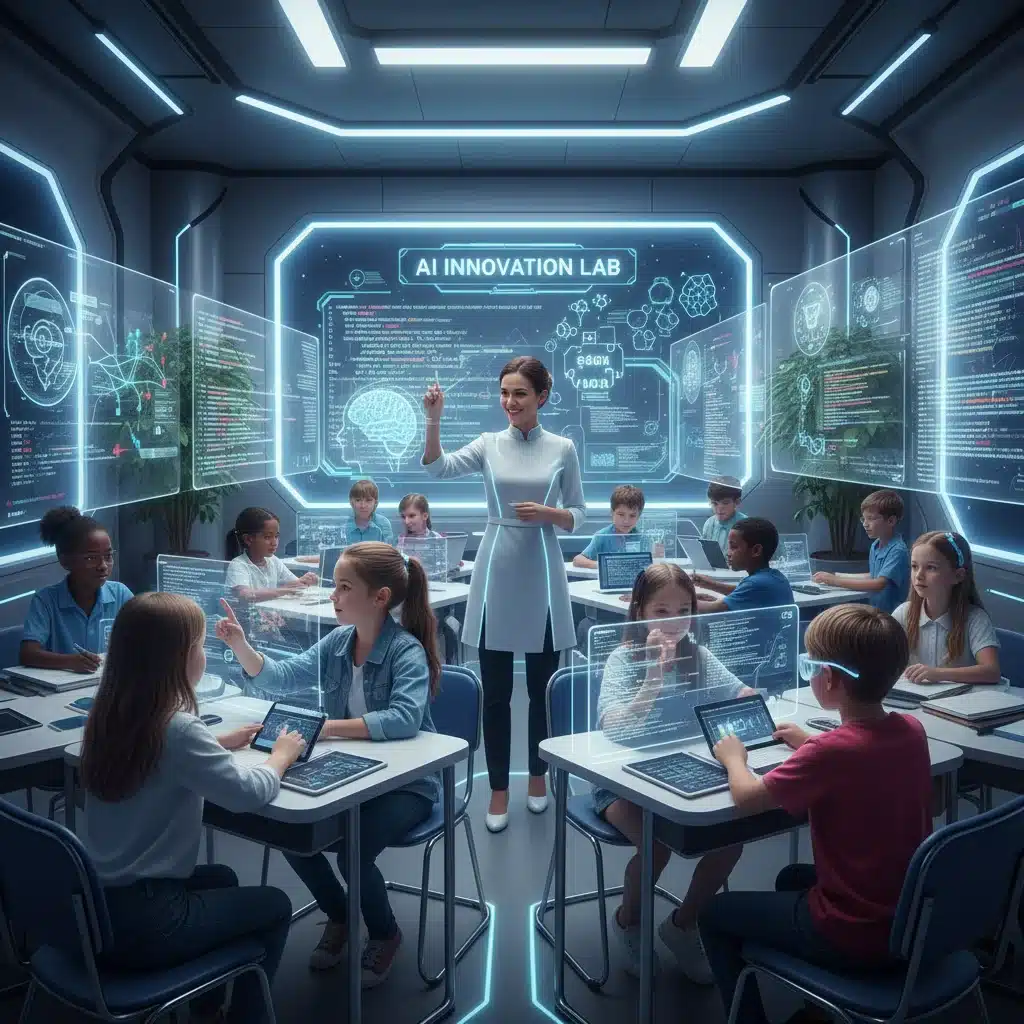
Bridging the Gap: How US Schools are Integrating AI Education for 21st-Century Readiness by 2026
The rapid advancement of artificial intelligence (AI) is not just reshaping industries and economies; it’s fundamentally transforming the very fabric of our society. As we hurtle towards 2026 and beyond, the imperative for educational systems to adapt and evolve has never been more critical. In the United States, schools are increasingly recognizing the urgency of integrating AI education into their curricula, not merely as an elective, but as a foundational component of 21st-century readiness. This comprehensive integration of AI education in US schools is pivotal for equipping the next generation with the skills, knowledge, and ethical understanding necessary to navigate and innovate in an an AI-driven world.
The conversation around AI education in US schools extends far beyond simply teaching students how to code. It encompasses fostering critical thinking, problem-solving, creativity, and an ethical framework for understanding and utilizing AI. This article delves into the multifaceted efforts being made across the US to embed AI literacy, computational thinking, and practical AI applications into K-12 and higher education, exploring the strategies, challenges, and the profound implications for the future workforce.
The Growing Imperative for AI Education in US Schools
The digital revolution has been underway for decades, but the advent of sophisticated AI technologies has brought about a new wave of transformation. From healthcare to finance, entertainment to manufacturing, AI is becoming an indispensable tool. This pervasive influence means that future citizens, regardless of their chosen career path, will interact with AI in various capacities. Therefore, a fundamental understanding of AI is no longer a niche skill but a universal requirement.
For US schools, the challenge is to move beyond traditional pedagogical approaches and embrace a curriculum that reflects these technological shifts. The goal of AI education in US schools is not to turn every student into an AI engineer, but rather to ensure that all students are AI-literate. This means understanding what AI is, how it works, its capabilities, its limitations, and its societal impact. By 2026, this literacy is expected to be as crucial as traditional literacy and numeracy.
The demand for AI skills in the workforce is skyrocketing. Industries are actively seeking professionals who can develop, deploy, and manage AI systems, as well as those who can critically analyze and interpret AI-generated insights. Without robust AI education in US schools, the nation risks a significant skills gap, hindering economic growth and technological innovation. Furthermore, a lack of widespread AI understanding could exacerbate societal inequalities, as those without AI literacy may be left behind in an increasingly automated world.
Current Landscape of AI Education in US Schools
While the integration of AI education is still in its nascent stages in many districts, several pioneering US schools and educational organizations are leading the charge. Initiatives range from introducing basic AI concepts in elementary school science classes to offering advanced AI programming courses at the high school level. Universities are also playing a crucial role, not only in research and development but also in preparing future educators to teach AI.
Early Childhood and Elementary Education: Laying the Foundation
Even at the elementary level, AI concepts are being subtly introduced. This isn’t about complex algorithms but about foundational ideas like pattern recognition, problem-solving, and computational thinking. Robotics kits, block-based coding platforms, and interactive games are being used to help young children understand how machines ‘think’ and make decisions. The focus is on demystifying AI and fostering a sense of curiosity and play around technology.
For instance, some schools are using AI-powered educational tools that adapt to individual learning styles, implicitly teaching students about adaptive systems. Discussions about smart home devices or recommendation engines can introduce concepts of data collection and algorithmic decision-making in an age-appropriate manner. This early exposure to AI education in US schools helps to build a comfort level and a foundational understanding that will be crucial for more advanced learning.
Middle School: Building Analytical Skills
In middle school, AI education begins to take on a more structured form. Students might engage in projects that involve training simple machine learning models, understanding data privacy, or exploring the ethical implications of AI. Curriculum development at this stage often includes modules on data science fundamentals, the basics of neural networks, and applications of AI in everyday life.
The emphasis here is on developing analytical skills and encouraging students to think critically about the information they consume and the technologies they interact with. Projects could involve analyzing datasets to identify trends, designing simple AI agents, or debating the pros and cons of AI in different contexts. This phase of AI education in US schools is crucial for bridging the gap between abstract concepts and practical applications.
High School: Advanced Concepts and Career Pathways
High school AI education is where students can delve deeper into the technical aspects of AI. Courses might cover programming languages like Python, machine learning algorithms, natural language processing, computer vision, and robotics. Advanced Placement (AP) courses in Computer Science are increasingly incorporating AI and machine learning topics, providing a pathway for students interested in pursuing STEM fields in higher education.
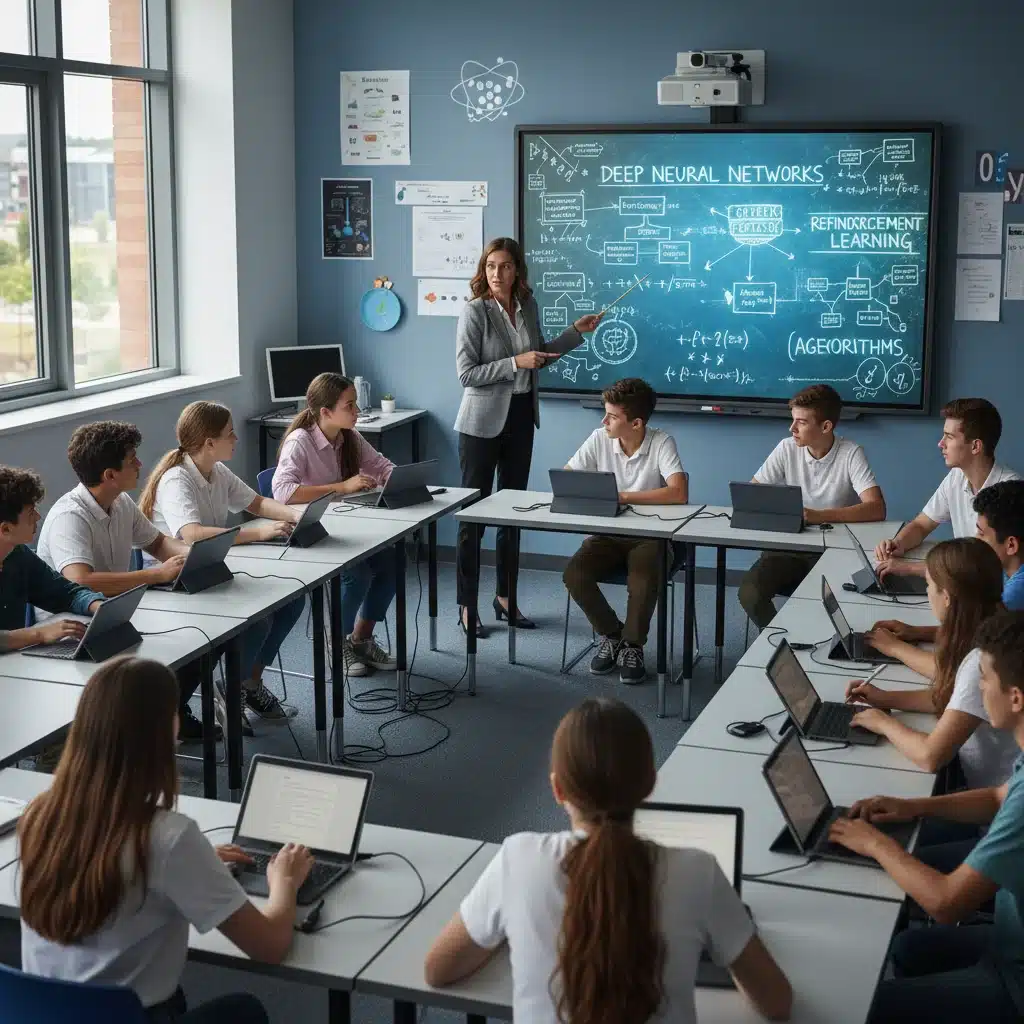
Beyond technical skills, high school programs also emphasize the ethical dimensions of AI, including bias in algorithms, data security, and the future of work. Partnerships with local tech companies and universities are also becoming more common, offering students internships, mentorships, and real-world project experience. These initiatives are vital for ensuring that AI education in US schools prepares students not just academically, but also professionally.
Key Strategies for Integrating AI Education
Successfully integrating AI education in US schools requires a multi-pronged approach, addressing curriculum, teacher training, resources, and community engagement.
Curriculum Development and Standardization
One of the primary challenges is developing a standardized yet flexible curriculum. Organizations like AI4K12 are working to create national guidelines and frameworks for AI education, establishing learning objectives across different grade levels. These frameworks often focus on five big ideas in AI: perception, representation and reasoning, learning, natural interaction, and societal impact.
The goal is to ensure consistency in what students learn, while also allowing districts and individual teachers the flexibility to tailor the content to their specific contexts and resources. This includes developing interdisciplinary approaches, where AI concepts are integrated into subjects like mathematics, science, social studies, and even arts and humanities. For instance, studying the ethical implications of AI can be part of a civics class, or using AI to generate art can be part of an art curriculum.
Teacher Training and Professional Development
The effectiveness of AI education in US schools hinges on the preparedness of its educators. Many current teachers may not have formal training in AI, necessitating robust professional development programs. These programs aim to equip teachers with the necessary knowledge and pedagogical skills to teach AI concepts effectively.
Universities, non-profits, and tech companies are collaborating to offer workshops, online courses, and certification programs for teachers. These initiatives often focus on both the technical aspects of AI and best practices for engaging students in AI topics. Investing in teacher training is paramount, as enthusiastic and knowledgeable educators are the cornerstone of successful AI integration.
Resource Allocation and Technology Infrastructure
Implementing AI education requires significant investment in technology infrastructure. Schools need access to computers, internet connectivity, and specialized software and hardware, such as robotics kits, AI development platforms, and cloud computing resources. Equitable access to these resources is crucial to prevent widening the digital divide.
Funding for these resources often comes from a combination of federal grants, state initiatives, local school budgets, and philanthropic donations. Creative solutions, such as leveraging existing computer labs or partnering with community organizations, can also help optimize resource allocation. The availability of these resources directly impacts the depth and breadth of AI education in US schools.
Community and Industry Partnerships
Engaging with industry experts, local businesses, and universities can greatly enrich AI education programs. These partnerships can provide guest speakers, mentorship opportunities, internships, and access to cutting-edge tools and real-world problems. For example, a local tech company might sponsor a robotics club or provide data scientists to mentor students on an AI project.
Such collaborations not only expose students to potential career paths but also ensure that the curriculum remains relevant to industry needs. They also help to demystify the field of AI and make it more accessible to a broader range of students. These partnerships are a vital component of fostering a comprehensive ecosystem for AI education in US schools.
Challenges and Roadblocks in AI Education
Despite the growing enthusiasm, integrating AI education in US schools is not without its hurdles. These challenges range from funding and infrastructure to curriculum design and ethical considerations.
Funding and Equitable Access
One of the most significant challenges is securing adequate funding for technology, teacher training, and curriculum development. Schools in low-income areas often lack the resources to implement comprehensive AI programs, potentially exacerbating existing educational inequalities. Bridging this gap requires targeted funding initiatives and policies that ensure equitable access to AI education across all demographics.
The cost of specialized software, hardware, and ongoing maintenance can be substantial. Furthermore, the rapid pace of technological change means that investments need to be continuous, requiring sustainable funding models. Addressing these financial disparities is crucial for the widespread success of AI education in US schools.
Teacher Preparedness and Retention
As mentioned, many current educators lack formal training in AI. While professional development programs are emerging, ensuring widespread teacher preparedness and retention remains a challenge. Attracting and retaining qualified computer science and AI teachers can be difficult, especially when competing with higher salaries in the tech industry. Strategies such as offering incentives, creating supportive professional learning communities, and integrating AI into teacher preparation programs are essential.
Moreover, the field of AI is constantly evolving, requiring teachers to continuously update their knowledge and skills. This necessitates ongoing professional development and access to up-to-date resources, which can be a strain on school budgets and teacher time.
Curriculum Overload and Integration
Schools are already grappling with packed curricula, and adding another subject or set of concepts can lead to curriculum overload. The key lies in strategic integration rather than simply adding more content. This involves weaving AI concepts into existing subjects, demonstrating their relevance across disciplines.
Developing interdisciplinary units that connect AI to science, math, social studies, and even language arts can make the learning more meaningful and less burdensome. For example, students could analyze how AI is used in historical research or explore the ethical dilemmas presented in AI-themed literature. This approach streamlines the integration of AI education in US schools.
Ethical Considerations and Bias
AI is not without its ethical quandaries, including algorithmic bias, data privacy concerns, and the potential for job displacement. It is imperative that AI education in US schools addresses these ethical considerations head-on. Students need to learn not only how AI works but also how to critically evaluate its impact on society.
Discussions around fairness, accountability, and transparency in AI are vital. Educators must guide students in understanding how biases can be inadvertently embedded in AI systems and the importance of developing AI responsibly. This ethical dimension is a critical, non-negotiable part of preparing students for an AI-driven future.

The Future of AI Education in US Schools by 2026 and Beyond
Looking ahead to 2026, the trajectory for AI education in US schools is one of accelerated growth and deeper integration. We can anticipate several key developments that will shape this landscape.
Widespread Adoption of AI Literacy Standards
By 2026, it is highly probable that AI literacy will be recognized as a fundamental skill, much like digital literacy is today. National and state educational standards will likely incorporate AI learning objectives across all grade levels, ensuring that every student receives a foundational understanding of AI. This will move AI education from an optional enrichment to a core component of the curriculum in US schools.
Personalized Learning Fueled by AI
Ironically, AI itself will play a significant role in enhancing AI education. AI-powered personalized learning platforms will become more sophisticated, adapting to individual student needs, providing customized feedback, and offering tailored learning pathways. This will allow educators to focus more on facilitating complex problem-solving and critical thinking, while AI handles more routine instructional tasks. The use of AI in delivering AI education will create a synergistic learning environment.
Increased Focus on Interdisciplinary AI Projects
The siloed approach to subjects will continue to erode, replaced by more interdisciplinary projects that demonstrate the real-world applications of AI. Students might work on projects that combine environmental science with AI for climate modeling, or art and design with AI for generative art. This approach will not only make learning more engaging but also better reflect the collaborative nature of work in an AI-driven world. These projects will be a hallmark of advanced AI education in US schools.
Emphasis on AI Ethics and Responsible Innovation
As AI becomes more powerful, the focus on ethical AI and responsible innovation will intensify. Curricula will dedicate significant attention to topics such as algorithmic bias, data governance, privacy, and the societal impact of AI. Students will be encouraged to think critically about the moral implications of AI technologies and to develop solutions that prioritize human well-being and equity. This ethical grounding will be a defining characteristic of AI education in US schools.
Stronger Industry-Education Ecosystems
The collaboration between educational institutions, industry, and government will deepen. Tech companies will invest more in K-12 AI education initiatives, offering resources, training, and mentorship. Universities will continue to refine their teacher preparation programs to include robust AI components. This ecosystem will ensure that AI education in US schools remains cutting-edge and relevant to the evolving demands of the workforce.
AI as a Tool for Creative Expression and Problem Solving
Beyond understanding how AI works, students will be empowered to use AI as a tool for creative expression and complex problem-solving. This could involve using AI to compose music, generate narratives, design new products, or develop innovative solutions to global challenges. The emphasis will shift from merely consuming AI-powered content to actively creating with AI, fostering a generation of innovators. This empowers students through AI education in US schools to become creators, not just users.
Conclusion: Paving the Way for an AI-Ready Generation
The integration of AI education in US schools is not just an educational trend; it is a societal imperative. By 2026, the foundations laid today will have significant implications for the nation’s economic competitiveness, technological leadership, and social equity. While challenges abound, the concerted efforts of educators, policymakers, industry leaders, and communities are steadily paving the way for a generation that is not only proficient in AI but also thoughtful, ethical, and innovative in its application.
Equipping students with AI literacy, computational thinking, and an ethical compass will empower them to thrive in an increasingly complex and technologically advanced world. The future success of the United States, in many ways, hinges on the effectiveness of its AI education in US schools. It is a monumental task, but one that promises immense rewards: a future workforce capable of harnessing AI for the betterment of society, driving innovation, and solving the grand challenges of our time. The journey of AI education in US schools is a testament to our commitment to preparing every student for a future that is already here.