AI Ethics Legislation: Congress Debates New Guidelines for Technology Regulation
AI Ethics Legislation: Congress Debates New Guidelines for Technology Regulation
The rapid advancement of artificial intelligence (AI) has brought unprecedented opportunities and significant challenges. As AI systems become more integrated into daily life, concerns about privacy, bias, accountability, and security have escalated. In response, legislative bodies worldwide are grappling with how to effectively regulate this transformative technology. In the United States, Congress is actively engaged in robust debates surrounding new AI ethics legislation, with a clear aim to establish comprehensive technology regulation. The discussions are intensifying, and political observers anticipate potential legislation by December 2026. This article delves into the intricacies of these congressional deliberations, exploring the key issues, proposed frameworks, and the broader implications for the future of AI.
The Urgency for AI Ethics Legislation
The imperative for robust AI ethics legislation stems from several critical factors. Firstly, the sheer pace of AI innovation often outstrips existing legal and ethical frameworks. Technologies like generative AI, facial recognition, and autonomous systems pose complex questions that current laws were not designed to address. Without clear guidelines, there’s a risk of unchecked development leading to unintended consequences, including algorithmic bias perpetuating societal inequalities, privacy infringements through extensive data collection, and the potential misuse of AI for surveillance or disinformation campaigns.
Secondly, public trust in AI is a growing concern. High-profile incidents involving AI failures or ethical breaches have highlighted the need for transparency and accountability. Consumers and citizens want assurances that AI systems are developed and deployed responsibly, respecting fundamental human rights and democratic values. Congress recognizes that establishing strong AI ethics legislation is crucial for fostering this trust and ensuring public acceptance of AI’s continued integration into society.
Thirdly, the global landscape of AI regulation is evolving rapidly. Countries and blocs like the European Union have already introduced comprehensive AI acts, setting a precedent for stringent oversight. The U.S. risks falling behind in shaping global AI norms if it doesn’t establish its own regulatory framework. A unified national approach to AI ethics legislation could not only protect American citizens but also position the U.S. as a leader in responsible AI development and governance.
The discussions in Congress are not merely academic; they reflect a deep understanding of the economic, social, and national security implications of AI. Lawmakers are tasked with balancing the need to foster innovation with the equally vital need to mitigate risks. This delicate balance forms the core of the current debates, as various stakeholders, from tech giants to civil liberties advocates, present their perspectives on what effective AI ethics legislation should entail.
Key Areas of Congressional Debate on AI Ethics Legislation
The congressional debates surrounding AI ethics legislation are multifaceted, touching upon several key areas that require careful consideration and the crafting of nuanced policies. These areas include data privacy, algorithmic bias, accountability, transparency, and the potential impact on labor markets and national security.
Data Privacy and Security
At the forefront of many discussions is the issue of data privacy. AI systems are inherently data-hungry, relying on vast datasets for training and operation. This raises significant concerns about how personal data is collected, stored, processed, and used. Legislators are exploring mechanisms to ensure robust data protection, potentially drawing inspiration from existing frameworks like GDPR or CCPA, but tailored specifically for AI contexts. The challenge lies in creating regulations that protect individual privacy without unduly stifling AI innovation, which often thrives on access to diverse datasets. Secure data handling practices and the prevention of data breaches are also paramount, as compromised AI systems could have far-reaching consequences.
Algorithmic Bias and Fairness
Another critical concern addressed by proposed AI ethics legislation is algorithmic bias. AI systems, particularly those trained on biased or unrepresentative data, can perpetuate and even amplify existing societal prejudices. This can lead to discriminatory outcomes in areas such as hiring, lending, criminal justice, and healthcare. Congressional debates are focusing on mandating fairness assessments, requiring developers to identify and mitigate biases, and establishing mechanisms for redress when biased AI decisions cause harm. The goal is to ensure that AI systems are developed and deployed in an equitable manner that promotes fairness and equal opportunity for all.
Accountability and Liability
Determining who is responsible when an AI system causes harm is a complex legal and ethical quandary. Is it the developer, the deployer, the data provider, or a combination? Current legal frameworks often struggle to assign liability in situations involving autonomous AI. New AI ethics legislation aims to clarify accountability structures, potentially introducing new legal doctrines or adapting existing ones to the unique characteristics of AI. This includes establishing clear lines of responsibility for errors, malfunctions, or misuse of AI, ensuring that victims have avenues for recourse.
Transparency and Explainability
The ‘black box’ nature of some advanced AI models makes it difficult to understand how they arrive at specific decisions. This lack of transparency, or explainability, poses significant challenges for oversight, auditing, and public trust. Legislators are debating requirements for greater transparency in AI systems, particularly those used in critical applications. This could involve mandating disclosures about how AI models are trained, what data they use, and how their decisions are made. While achieving full explainability for all AI systems might be technically challenging, the focus is on ensuring that critical AI decisions can be understood, scrutinized, and justified.
Impact on Labor and Future of Work
The growing adoption of AI also raises concerns about its impact on employment and the future of work. While AI promises to create new jobs and boost productivity, there are legitimate fears about job displacement and the need for workforce retraining. Congressional discussions on AI ethics legislation are considering how to address these societal transitions, potentially through investments in education and reskilling programs, or by exploring policies that support workers affected by automation. The aim is to ensure a smooth and equitable transition in the labor market as AI technologies become more pervasive.
National Security Implications
Finally, the national security implications of AI are a significant part of the congressional dialogue. This includes the responsible development and use of AI in defense applications, preventing its use by malicious actors, and maintaining a competitive edge in AI development against geopolitical rivals. AI ethics legislation in this context would seek to establish guardrails for military AI, address concerns about autonomous weapons systems, and foster international cooperation on AI safety and security.

Proposed Frameworks and Legislative Approaches
As Congress navigates these complex issues, several legislative approaches and frameworks are being considered for future AI ethics legislation. These range from broad, overarching principles to sector-specific regulations, each with its own set of advantages and disadvantages.
Risk-Based Approach
Many proposals advocate for a risk-based approach, similar to the European Union’s AI Act. This framework categorizes AI systems based on their potential to cause harm, with stricter regulations applied to ‘high-risk’ AI applications (e.g., in critical infrastructure, healthcare, or law enforcement) and lighter touch regulations for lower-risk systems. This approach allows for tailored oversight, focusing regulatory resources where they are most needed, while avoiding stifling innovation in less sensitive areas. Congressional committees are actively exploring how to define and classify these risk categories effectively within the U.S. legal context.
Sector-Specific Regulation
Another perspective suggests that a one-size-fits-all approach to AI ethics legislation might be impractical given the diverse applications of AI. Instead, some lawmakers propose sector-specific regulations, where existing agencies (e.g., FDA for medical AI, FTC for consumer AI, SEC for financial AI) would develop AI-specific rules within their respective domains. This leverages existing expertise and regulatory infrastructure but could lead to a fragmented regulatory landscape and potential inconsistencies across sectors. The debate centers on finding a balance between comprehensive oversight and practical implementation.
Voluntary Guidelines and Industry Standards
While often seen as a precursor or complement to legislation, voluntary guidelines and industry standards also play a significant role in the congressional discussion. Some argue that fostering self-regulation and the development of best practices within the tech industry can be more agile and responsive to rapid technological changes than traditional legislation. However, critics contend that voluntary measures alone are insufficient to ensure widespread compliance and protect public interest, especially when profit motives might conflict with ethical considerations. Therefore, any legislative package is likely to consider how to integrate or mandate adherence to certain industry standards.
Establishment of a New AI Agency or Task Force
A recurring theme in the debates is the potential need for a new federal agency or a dedicated task force to oversee AI development and implementation. Such an entity could be responsible for developing technical standards, conducting AI audits, providing guidance to businesses, and enforcing compliance with future AI ethics legislation. The creation of a specialized body could bring much-needed expertise and focus to AI governance, but it also raises questions about bureaucratic overhead and potential overlaps with existing agencies. Lawmakers are carefully weighing the pros and cons of establishing such a powerful new entity.
International Cooperation and Harmonization
Given that AI is a global phenomenon, congressional discussions also acknowledge the importance of international cooperation. Harmonizing regulatory approaches with allies and international partners could prevent regulatory arbitrage and foster a more consistent global framework for responsible AI development. While not directly part of domestic AI ethics legislation, the U.S. approach will undoubtedly influence and be influenced by global efforts, making international collaboration a key consideration for lawmakers.
Challenges and Hurdles for AI Ethics Legislation
Despite the growing consensus on the need for AI ethics legislation, Congress faces numerous challenges and hurdles in drafting and enacting effective laws. These complexities stem from the nature of AI itself, the political landscape, and the diverse interests of various stakeholders.
Defining AI and its Scope
One of the primary challenges is the very definition of AI. The technology is rapidly evolving, and a definition that is too narrow could quickly become obsolete, while one that is too broad might encompass technologies that do not require such stringent regulation. Crafting future-proof definitions that can adapt to technological advancements is a significant legislative hurdle. The scope of the legislation also needs careful consideration – should it cover all AI applications, or focus only on those deemed ‘high-risk’ or with significant societal impact?
Pacing Legislation with Innovation
The speed of AI innovation presents a fundamental challenge to the legislative process. Laws are typically slow to enact and even slower to amend, whereas AI technology can transform in a matter of months. This mismatch in pace risks creating outdated regulations that either stifle innovation or fail to address emerging threats. Congress must find ways to build flexibility into any AI ethics legislation, perhaps through adaptive regulatory mechanisms or periodic review clauses, to ensure it remains relevant and effective.
Balancing Innovation and Regulation
A constant tension in the debates is how to strike the right balance between fostering innovation and implementing necessary regulation. Overly burdensome regulations could stifle the growth of the U.S. AI industry, pushing development overseas. Conversely, insufficient regulation could lead to significant societal harms. Lawmakers are under pressure from both industry lobbyists advocating for lighter touch regulation and civil society groups pushing for stronger protections. Finding a consensus that satisfies both sides while serving the public interest is a formidable task.
Political Polarization and Bipartisan Consensus
The current political climate in the U.S. often sees significant partisan divides on major policy issues. While there appears to be bipartisan recognition of the importance of AI regulation, the specifics of AI ethics legislation could become highly politicized. Reaching a consensus across the aisle on complex technical and ethical issues will require significant negotiation and compromise. The deadline of December 2026 for potential legislation suggests an urgent need for bipartisan collaboration.
Enforcement Mechanisms and Resources
Even if robust AI ethics legislation is enacted, its effectiveness will depend heavily on adequate enforcement mechanisms and resources. This includes funding for regulatory bodies, training for inspectors, and the development of technical expertise within government agencies. Without sufficient resources, even the best-intentioned laws could prove difficult to implement and enforce, undermining their intended impact. The debates are also considering the penalties for non-compliance and how to ensure accountability for violations.

The Path Forward: Anticipating Legislation by December 2026
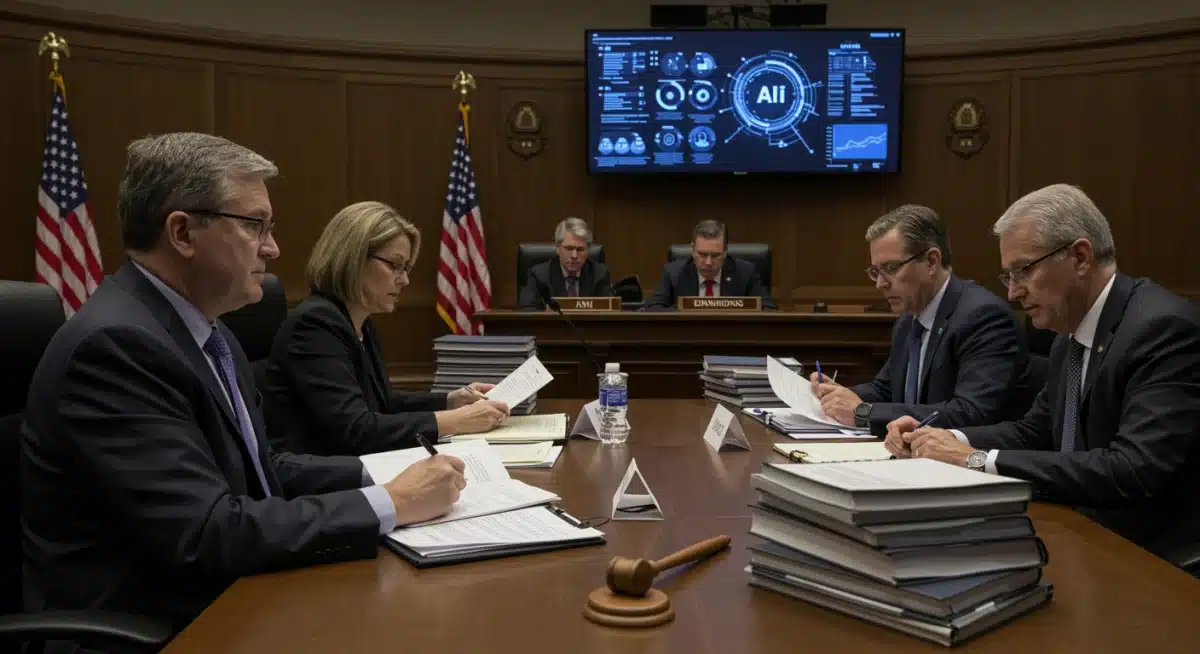
The timeline for potential AI ethics legislation by December 2026 signals a serious commitment from Congress to address the challenges posed by artificial intelligence. This ambitious goal suggests that lawmakers intend to move beyond exploratory discussions and towards concrete policy actions. The period leading up to this deadline will likely be characterized by intensified committee hearings, expert testimonies, and stakeholder consultations, all aimed at refining legislative proposals.
Role of Expert Advisory Boards
Given the technical complexity of AI, Congress is heavily relying on expert advisory boards, academic researchers, and industry leaders to inform their decisions. These experts provide crucial insights into the capabilities and limitations of AI, potential risks, and viable regulatory solutions. Their input will be instrumental in shaping the technical aspects of any future AI ethics legislation, ensuring that the laws are both effective and technologically feasible.
Public and Stakeholder Engagement
Public input and engagement from a broad range of stakeholders will also be vital. Civil society organizations, consumer advocacy groups, labor unions, and human rights advocates are actively participating in the debate, ensuring that diverse perspectives are heard. This engagement helps to highlight potential societal impacts and ensures that the resulting AI ethics legislation reflects a wide array of public values and concerns. Industry stakeholders, including large tech companies and AI startups, are also heavily involved, providing insights into the practical implications of proposed regulations.
Iterative Legislative Process
It is highly probable that the path to comprehensive AI ethics legislation will be an iterative one. Initial legislation may focus on establishing foundational principles and addressing the most pressing risks, with provisions for future updates and amendments as the technology evolves and new challenges emerge. This adaptive approach acknowledges the dynamic nature of AI and the need for regulatory frameworks to remain flexible. The December 2026 target might represent the first significant legislative package, with subsequent refinements over time.
Potential Impact on Businesses and Innovators
For businesses and innovators, the impending AI ethics legislation will necessitate a proactive approach to compliance. Companies developing or deploying AI systems will need to invest in ethical AI frameworks, conduct bias audits, ensure data privacy, and develop transparent accountability mechanisms. While this may present initial challenges, it also offers an opportunity for responsible AI developers to gain a competitive advantage and build greater trust with consumers and partners. Early adoption of best practices aligned with anticipated regulations could position companies favorably in the evolving AI landscape.
Global Implications of U.S. AI Ethics Legislation
The U.S. approach to AI ethics legislation will have significant global implications. As a major player in AI research and development, American regulations could influence international standards and foster greater alignment in global AI governance. This could lead to more interoperable AI systems and simplified compliance for multinational corporations, or, conversely, create new complexities if approaches diverge significantly from those of other major economies. The outcome of these congressional debates will undoubtedly shape the global trajectory of AI development and deployment for years to come.
Conclusion: Shaping the Future of AI Responsibly
The congressional debate over new AI ethics legislation marks a pivotal moment in the history of technology governance. The discussions are comprehensive, touching upon every facet of AI’s societal impact, from individual privacy to national security. With a target for potential legislation by December 2026, the urgency to craft effective and adaptive regulations is palpable. The challenges are numerous, including defining AI, keeping pace with innovation, balancing competing interests, and overcoming political hurdles. However, the commitment to establishing a framework for responsible AI development and deployment is clear.
The outcome of these legislative efforts will profoundly shape not only the future of AI in the United States but also its global trajectory. By engaging in thoughtful dialogue, leveraging expert insights, and fostering bipartisan collaboration, Congress has the opportunity to create landmark AI ethics legislation that protects citizens, promotes innovation, and establishes a precedent for ethical technology governance for generations to come. The goal is to harness the immense potential of AI while ensuring it serves humanity’s best interests, fostering a future where AI is not just intelligent, but also fair, transparent, and accountable.