Smart Investment Moves for 2026: Emerging Markets & 10% Growth

To achieve 10% growth potential in 2026, smart investment moves will center on strategically capitalizing on dynamic emerging market trends, requiring a nuanced understanding of economic shifts and innovative sectors.
Are you looking to position your portfolio for significant returns in the coming years? The landscape of global finance is constantly evolving, and making smart investment moves for 2026 requires foresight and an understanding of where the next wave of growth will emerge. This article delves into the strategies and sectors poised to offer compelling opportunities, particularly within dynamic emerging markets, with a clear focus on achieving a robust 10% growth potential.
Understanding the Global Economic Landscape for 2026
As we approach 2026, the global economic landscape continues to be shaped by a confluence of factors, including technological advancements, geopolitical shifts, and evolving consumer behaviors. Identifying these macro trends is the first step in formulating effective investment strategies that can deliver substantial returns. Investors must look beyond traditional markets and consider regions and industries undergoing rapid transformation.
The post-pandemic recovery has highlighted the resilience and adaptability of various economies, with some emerging markets demonstrating faster growth trajectories than developed nations. This divergence creates unique opportunities for those willing to explore new frontiers. Furthermore, inflation, interest rate policies, and supply chain reconfigurations will continue to influence market dynamics, necessitating a flexible and informed investment approach.
Key Global Economic Drivers
Several drivers are expected to dominate the global economy leading up to and through 2026. Understanding these forces is crucial for pinpointing sectors and regions ripe for investment.
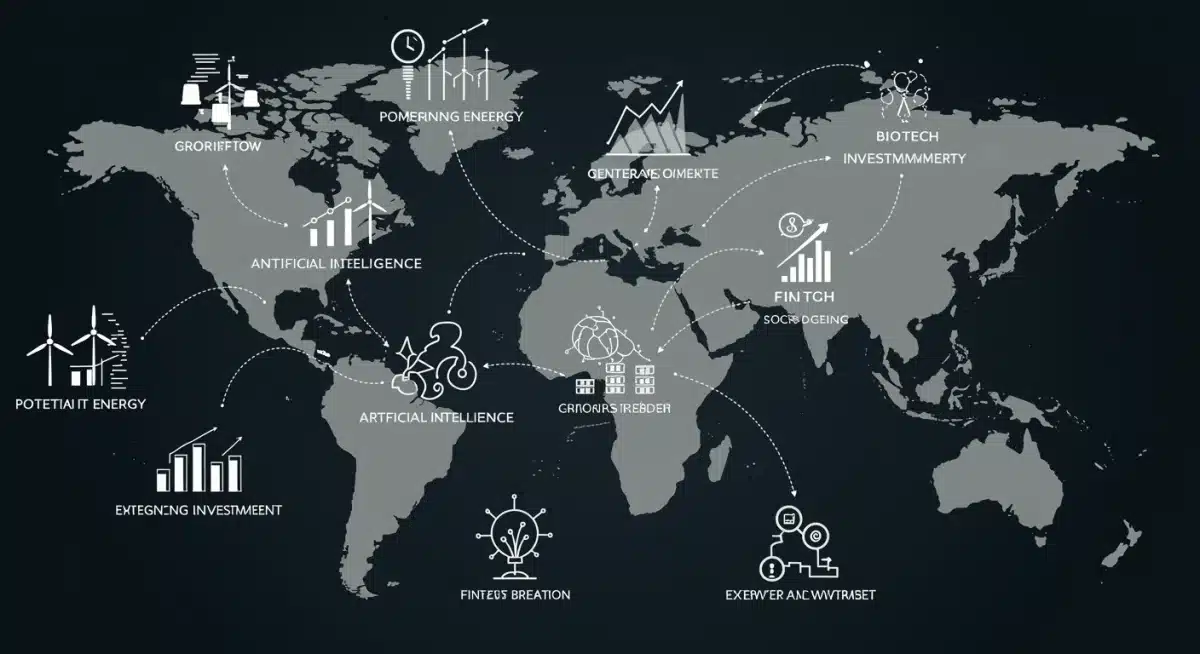
- Technological Innovation: AI, blockchain, and biotechnology are not just buzzwords; they are foundational technologies driving productivity and creating entirely new industries.
- Demographic Shifts: Rapid urbanization and a growing middle class in many emerging economies are fueling demand for goods and services.
- Green Transition: The global push towards sustainability and renewable energy is creating massive investment opportunities in green technologies and infrastructure.
Navigating these complex economic currents requires diligent research and a willingness to adapt investment theses. The goal is to identify areas where these drivers intersect with strong market fundamentals, offering a pathway to achieving growth targets.
Identifying Promising Emerging Market Trends
Emerging markets are often characterized by higher volatility but also offer significantly greater growth potential compared to their more mature counterparts. For 2026, several key trends within these markets stand out as particularly promising for investors aiming for a 10% growth target.
The rapid adoption of digital technologies, coupled with favorable demographics and increasing disposable incomes, is fueling an economic transformation in many developing nations. This creates fertile ground for businesses across various sectors, from e-commerce to digital banking, to thrive and expand at an accelerated pace.
Growth Sectors in Emerging Economies
While the specific opportunities will vary by region, certain sectors consistently appear poised for substantial growth across emerging markets.
- Digital Transformation: The expansion of internet access and smartphone penetration is driving growth in e-commerce, fintech, and digital services.
- Renewable Energy: Many emerging economies are investing heavily in solar, wind, and hydroelectric power to meet increasing energy demands and climate goals.
- Healthcare Innovation: Growing populations and rising incomes are leading to increased demand for advanced healthcare solutions and pharmaceuticals.
- Consumer Discretionary: As wealth increases, so does spending on non-essential goods and services, presenting opportunities in retail, entertainment, and tourism.
Focusing on these sectors allows investors to tap into the fundamental shifts occurring within these economies. However, it is vital to conduct thorough due diligence and understand the specific regulatory and political environments of each market.
Strategic Asset Allocation for 10% Growth Potential
Achieving a 10% growth potential by 2026 requires a carefully constructed asset allocation strategy that balances risk and reward. While emerging markets offer significant upside, diversification remains paramount. A well-diversified portfolio should include a mix of asset classes, sectors, and geographies to mitigate risks inherent in any single market.
Investors should consider allocating a portion of their portfolio to emerging market equities and bonds, but also maintain exposure to developed markets for stability. The allocation should be dynamic, allowing for adjustments as market conditions evolve and new opportunities arise or risks intensify. Tactical shifts based on economic indicators and geopolitical developments will be crucial.
Diversification Beyond Traditional Assets
Beyond traditional stocks and bonds, exploring alternative investments can further enhance diversification and potentially boost returns.
- Private Equity in Emerging Markets: Investing in private companies in high-growth emerging sectors can offer exposure to early-stage innovation and significant capital appreciation.
- Real Estate in Urbanizing Regions: Rapid urbanization in emerging economies creates demand for commercial and residential real estate, offering attractive returns.
- Commodities: Exposure to essential commodities, particularly those used in green technologies, can act as a hedge against inflation and benefit from global demand shifts.
The key to successful asset allocation is not just about identifying individual winners but also about constructing a portfolio that can withstand market fluctuations while capturing long-term growth trends. Regular rebalancing and a clear understanding of one’s risk tolerance are essential components of this strategy.
Leveraging Technological Advancements in Investment Decisions
Technological advancements are not only creating new investment opportunities but also transforming the way investors make decisions. From artificial intelligence to big data analytics, technology provides powerful tools to identify trends, assess risks, and optimize portfolios. Embracing these tools can give investors a significant edge in the competitive landscape of 2026.
Algorithmic trading, machine learning models, and predictive analytics can process vast amounts of data much faster and more efficiently than human analysis. This allows for quicker identification of mispriced assets, emerging market anomalies, and potential growth catalysts that might otherwise be overlooked. Investors who integrate these technologies into their research and decision-making processes will be better positioned to capitalize on fleeting opportunities.
AI and Data Analytics for Market Insights
The application of AI and data analytics extends beyond just trading; it can also provide deeper insights into consumer behavior, supply chain resilience, and geopolitical risks, all crucial for emerging market investments.
- Predictive Modeling: AI can analyze historical data to forecast market movements, currency fluctuations, and commodity prices, offering a forward-looking perspective.
- Sentiment Analysis: Machine learning algorithms can gauge market sentiment by analyzing news articles, social media, and financial reports, providing early warnings or bullish indicators.
- Risk Management: Advanced analytics can identify hidden correlations and concentrations of risk within a portfolio, allowing for proactive adjustments.
By leveraging these technological capabilities, investors can make more informed and data-driven decisions, reducing reliance on gut feelings and enhancing the precision of their investment strategies. This technological edge is particularly valuable when navigating the often less transparent and more complex emerging markets.
Mitigating Risks in Emerging Market Investments
While the allure of 10% growth potential in emerging markets is strong, it’s crucial to acknowledge and actively mitigate the inherent risks. These markets often face higher political instability, currency fluctuations, regulatory uncertainties, and less developed legal frameworks compared to established economies. A robust risk management strategy is therefore non-negotiable for successful investing in these regions.
Thorough due diligence extends beyond financial statements; it involves understanding the political climate, economic policies, and social dynamics of the target country. Diversification across multiple emerging markets and sectors can help spread risk, preventing over-reliance on any single economy or industry. Furthermore, a long-term investment horizon can help weather short-term volatilities.
Key Risk Mitigation Strategies
Effective risk mitigation involves a combination of research, strategic positioning, and continuous monitoring.
- Geographic Diversification: Spread investments across various emerging regions (Asia, Latin America, Africa) to reduce country-specific risks.
- Currency Hedging: Employ strategies to protect against adverse currency movements, which can significantly impact returns from foreign investments.
- Understanding Political Risk: Stay informed about political developments and potential policy changes that could affect investments, and be prepared to adjust positions.
- Regulatory Due Diligence: Thoroughly research the regulatory environment and legal protections for investors in each market.
By proactively addressing these risks, investors can build more resilient portfolios capable of capturing the high growth potential of emerging markets while minimizing downside exposure. It’s about being prepared for the unexpected and having contingency plans in place.
Long-Term Vision and Adaptability for 2026 and Beyond
Achieving a 10% growth potential in 2026 is not a one-time event but rather a milestone in a continuous investment journey. A long-term vision, coupled with the ability to adapt to changing market conditions, is fundamental for sustained success. The global economy is dynamic, and what works today may not work tomorrow. Therefore, continuous learning and flexibility are paramount.
Investors should regularly review their portfolios, reassess their investment theses, and be prepared to make adjustments based on new information, technological breakthroughs, or shifts in geopolitical dynamics. The focus should always be on identifying sustainable growth drivers rather than chasing short-term fads. Patience and discipline are virtues that often yield the best results in the long run.
Cultivating a Flexible Investment Mindset
A successful investor in emerging markets needs to cultivate a mindset that embraces change and continuous learning.
- Stay Informed: Regularly consume financial news, economic reports, and expert analyses specifically focused on emerging markets.
- Reassess Regularly: Periodically review your investment strategy and portfolio allocation to ensure it aligns with your goals and current market realities.
- Embrace New Technologies: Be open to integrating new analytical tools and platforms that can enhance your investment decision-making.
Ultimately, the ability to combine a clear long-term vision with tactical adaptability will be the defining characteristic of investors who successfully capitalize on emerging market trends and achieve their growth objectives by 2026 and beyond. It’s about being proactive, informed, and resilient in the face of an ever-changing financial world.
| Key Investment Area | Growth Potential & Focus |
|---|---|
| Emerging Market Equities | High growth in digital, green energy, and consumer sectors due to rapid development. |
| Technological Innovation | AI, biotech, and fintech driving efficiency and new market creation globally. |
| Sustainable Investments | Renewable energy and ESG-focused companies benefiting from global transition. |
| Strategic Diversification | Balancing emerging market exposure with developed market stability and alternative assets. |
Frequently Asked Questions About 2026 Investments
Primary risks include political instability, currency volatility, regulatory changes, and less transparent market structures. Geopolitical events and economic policy shifts can significantly impact investment returns in these regions, requiring careful monitoring and diversification strategies.
Sectors like digital transformation (e-commerce, fintech), renewable energy, healthcare innovation, and consumer discretionary are expected to show robust growth. These areas benefit from increasing internet penetration, urbanization, and rising disposable incomes in developing nations.
Technology, especially AI and big data analytics, can provide predictive insights, sentiment analysis, and enhanced risk management. These tools help investors process vast amounts of information quickly, identify emerging trends, and optimize portfolio allocation more effectively than traditional methods.
While not guaranteed, a 10% annual growth target is realistic for well-researched and strategically diversified emerging market investments, given their higher growth potential compared to developed markets. However, it comes with increased risk and requires a long-term perspective.
Diversification is crucial for mitigating risks associated with emerging markets. Spreading investments across different countries, sectors, and asset classes helps reduce exposure to specific market downturns or geopolitical events, enhancing portfolio resilience and stability.
Conclusion
As we set our sights on 2026, the opportunity to achieve significant financial growth, potentially reaching a 10% annual return, lies predominantly in understanding and strategically engaging with emerging market trends. This requires a blend of astute market analysis, a willingness to embrace technological advancements in investment decision-making, and a robust approach to risk management. By focusing on dynamic sectors like digital transformation, green energy, and healthcare in rapidly developing economies, and by maintaining a flexible, long-term vision, investors can position themselves to capitalize on the next wave of global economic expansion. The journey to smart investment is continuous, demanding adaptability and an informed perspective to navigate the complexities and unlock the vast potential that emerging markets offer.